
Indian benchmark indices Sensex and Nifty experienced declines in early trade, influenced by the escalating US-Iran standoff and persistently high crude oil prices, with experts predicting increased volatility.

US missions across West Asia have issued a security alert advising American nationals to "exercise heightened vigilance" due to Houthi attacks against Saudi Arabia and the potential for Iran and its allies to target US interests. The advisory warns of potential travel disruptions and escalating hostilities, linking the Houthi actions to Iran's regional network and the ongoing US-Iran conflict.

The Indian stock market's movement this week will be significantly influenced by the outcome of US-Iran talks, global crude oil prices, and the trading activities of foreign institutional investors (FIIs), according to market analysts.

Prime Minister Narendra Modi and Israeli PM Benjamin Netanyahu held a telephone conversation to discuss recent developments in West Asia, emphasising the urgent need for peace and stability. They also reaffirmed their commitment to strengthening the India-Israel Special Strategic Partnership.

Pakistan Prime Minister Shehbaz Sharif clarified that the recent Memorandum of Understanding (MoU) signed between the US and Iran does not include provisions regarding Tehran's ballistic missile programme. This statement followed talks with Iranian President Masoud Pezeshkian, with Sharif emphasising Iran's right to its defence capabilities and Pakistan's role as a mediator in the US-Iran peace process.

Indian benchmark indices, Sensex and Nifty, closed lower due to significant selling in HDFC Bank and Axis Bank shares, driven by margin-related concerns and escalating US-Iran tensions, which also pushed crude oil prices higher.

Pakistan and Qatar have successfully mediated separate meetings between US and Iranian negotiators in Doha, reporting positive progress on a Memorandum of Understanding aimed at West Asian peace. Further discussions are planned after the funeral of former Iranian Supreme Leader Ayatollah Ali Khamenei.

Much will depend on how the protagonists use the current interlude to work proactively for the beginning of a durable settlement or, on the contrary, prepare for a new round of escalation, points out Ambassador M K Bhadrakumar.
Top leaders from the US, Iran, and Pakistan, along with other nations, have gathered in Switzerland for high-level talks aimed at restoring peace in West Asia. These negotiations follow a recently signed Memorandum of Understanding between the US and Iran, initiating a 60-day window for a deal. Discussions focus on Iran's nuclear programme and the fragile interim peace deal, amidst renewed tensions and the fluctuating status of the Strait of Hormuz.

A potential US-Iran peace deal, expected to be signed on June 19, is anticipated to ease geopolitical stress and benefit various sectors, particularly in India, with analysts suggesting investors await finer details before making significant moves.

The Kuwaiti Army reported intercepting hostile missile and drone attacks, while tensions escalate between the US and Iran with reported strikes and confrontations near the Strait of Hormuz.

The Indian equity market is set for an event-heavy week, with analysts pointing to the Reserve Bank of India's (RBI) interest rate decision, developments in the US-Iran situation, and crude oil prices as the primary determinants of market trends.

Indian stock markets are set to be influenced by developments in US-Iran negotiations, crude oil prices, and foreign investor activity in the upcoming holiday-shortened week, according to market analysts.

Uncertainty surrounds the US-Iran talks as a two-week ceasefire approaches its end. Pakistan is attempting to mediate, but tensions remain high after a recent naval incident.

Iranian media reported an exchange of fire between Iranian and US forces near the Strait of Hormuz, amidst a shaky ceasefire between the two countries.

The United States and Iran could be set to announce an agreement soon to achieve a complete solution to the hostilities in West Asia, as reported by Saudi state media Al Arabiya on Wednesday, citing sources familiar with the ongoing negotiations.

The Reserve Bank of India's Financial Stability Report indicates that the interim peace deal between the US and Iran has favourably shifted the balance of risks, reducing headwinds from the West Asia conflict. However, it cautions that exchange rate volatility could increase if crude oil prices spike due to delayed normalisation of supply chain disruptions.

The United States and Iran are scheduled to hold their initial round of talks in Switzerland on Friday, following a ceasefire agreement virtually signed by US President Donald Trump and Iranian President Masoud Pezeshkian.

Pakistan capital Islamabad is emerging as the leading venue for the next round of technical negotiations between the US and Iran, a media report said Sunday.

Indian equity benchmark indices Sensex and Nifty experienced a significant tumble in early trade, with the Sensex tanking nearly 700 points, driven by uncertainty surrounding US-Iran negotiations, a fresh spike in crude oil prices, and persistent foreign fund outflows.

Analysts predict that geopolitical developments, particularly surrounding the Strait of Hormuz and the US-Iran standoff, along with crude oil prices, will be the primary factors influencing stock market movement in the coming week. Investors will also monitor foreign institutional flows and the Federal Open Market Committee (FOMC) minutes for signals on the Federal Reserve's policy outlook.

After a significant 9.9% depreciation in FY26, the Indian rupee has shown comparative stability in the first half of FY27, depreciating by only 1.1%, attributed to regulatory interventions and measures to attract foreign capital, despite ongoing global pressures from rising crude oil prices and foreign investor outflows.

Foreign portfolio investors (FPIs) have injected Rs 30,919 crore into Indian equities in August, marking their second consecutive month of net buying. This follows a Rs 20,200 crore investment in July, indicating a potential reversal after four months of significant outflows, driven by improving corporate earnings, resilient economic activity, and a stable rupee.

The US and Iran have agreed on a roadmap aimed at reaching a final agreement within 60 days after hours-long talks at the Swiss resort of Burgenstock, mediators Qatar and Pakistan said on Monday, describing the progress as "encouraging."

Foreign portfolio investors (FPIs) have withdrawn nearly Rs 5,109.21 crore from Indian government securities under the fully accessible route (FAR) in just three days, driven by global uncertainty, elevated crude prices, rising US Treasury yields, and a depreciating rupee.
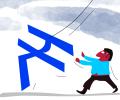
The Indian rupee depreciated by 28 paise to settle at 93.44 against the US dollar, influenced by ongoing uncertainties surrounding West Asia peace negotiations, volatile crude oil prices, and the Reserve Bank of India's recent adjustments to non-deliverable forward market regulations.

Pakistan's government is exploring measures, including potential smart lockdowns and austerity, to reduce petroleum consumption. This comes after recent fuel price hikes driven by rising global oil prices and West Asia tensions, which have also raised concerns about oil supply disruptions. The government is also implementing a fuel relief scheme and faces public pressure over the price increases.

Gold prices in the national capital fell by Rs 600 to Rs 1.64 lakh per 10 grams, influenced by tentative progress in US-Iran negotiations, which reduced demand for precious metals. However, unresolved tensions surrounding the Strait of Hormuz continue to keep traders cautious.

'If crude remains above $100 per barrel, with restricted retail-price increases, OMCs could face negative petrol and diesel marketing margins, higher LPG under-recoveries, higher crude-landing, freight and insurance costs, working capital and debt accumulation and inventory losses if crude subsequently corrects sharply.'

The United States and Iran have reached an agreement in principle to immediately and permanently halt all military operations, lift sanctions, and work towards a comprehensive final agreement within 60 days, including a significant reconstruction package for Iran.
After four consecutive months of withdrawals, Foreign Portfolio Investors (FPIs) injected Rs 20,200 crore into Indian equities in July, driven by attractive valuations, improving corporate earnings, and a more favourable global environment.

Indian information technology (IT) stocks, led by Infosys, experienced a significant selloff, dragging the Nifty to a two-month low, primarily due to escalating West Asian tensions pushing crude oil prices higher, and concerns over upcoming large IPOs diverting funds from secondary markets. The sector is also grappling with the long-term implications of AI disruption.

US President Donald Trump warned Iran of potential escalation despite a recent ceasefire agreement, stating that US forces will remain in the region until a 'real agreement' is reached.

Foreign Portfolio Investors (FPIs) have injected Rs 16,621 crore into Indian equities during the first half of August, continuing a buying spree driven by improving relative valuations, resilient corporate earnings, and expectations of softer US interest rates.

The BRICS grouping adopted a consensus joint declaration in New Delhi, successfully navigating differences on the West Asia conflict but notably omitting any direct mention of US strikes on Iran or Iranian military attacks on Gulf Arab nations. The declaration also criticised Israel's actions in Gaza and called for a concerted approach against terrorism.

United States President Donald Trump and Iranian President Masoud Pezeshkian have virtually signed a 14-point memorandum of understanding (MoU) to end hostilities, reopen the Strait of Hormuz, and begin a 60-day negotiation process on sanctions and Iran's nuclear programme.

Pakistan's Interior Minister Mohsin Naqvi visited Tehran for the third time recently to mediate peace amidst rising tensions between the US and Iran. Pakistan is actively leading diplomatic efforts to de-escalate the conflict in West Asia, which has impacted global energy markets and trade.

The US has informed allies it will avoid new military strikes on Iran, instead focusing on economic sanctions and maritime enforcement, particularly in the Strait of Hormuz. This strategic shift aims to intensify pressure on Tehran's economy and oil exports while keeping the military option open if Iran initiates aggression. Diplomatic efforts continue amidst persistent regional tensions and maritime incidents.

Indian markets on Dalal Street rallied sharply as easing tensions in the US-Iran conflict and stable oil prices boosted sentiment. Track Nifty 50 and BSE Sensex performance and key global triggers.

Outward remittances under the Reserve Bank of India's Liberalised Remittance Scheme (LRS) saw a 7.85 per cent year-on-year contraction in April 2026, primarily driven by reduced international travel spending due to global uncertainty stemming from the US-Iran conflict.
